Red teaming is a key pillar of a modern cybersecurity strategy. By emulating the tactics, techniques, and procedures (TTPs) of real-world attackers, organizations can test their defenses and readiness for a potential breach. Industry data shows that a significant 74% of organizations perform red team exercises regularly. However, a critical and often underestimated challenge has emerged with the widespread migration to cloud computing: the skills required for effective on-premises red teaming do not translate to the cloud. This growing gap leaves many organizations exposed, even those with mature security programs.
Attack Surface Comparison: On-premises vs Cloud
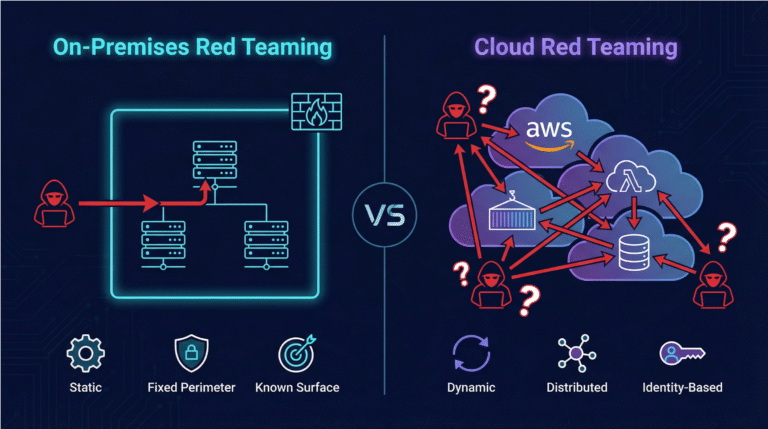
The fundamental difference between on-premises and cloud security lies in the attack surface and the nature of vulnerabilities. Traditional on-premises security is a discipline of network perimeters, physical access, and server hardening. In contrast, cloud security is a world of ephemeral resources, complex identity and access management (IAM) policies, and interconnected APIs. The cloud needs to be accessible.
| Feature | On-Premises Environment | Cloud Environment |
| Primary Focus | Network perimeter, physical security, server hardening. | Service configurations, IAM policies, API security, serverless functions. |
| Scope | Defined by the physical and logical network boundaries. | Defined by the customer’s side of the Shared Responsibility Model; infrastructure layer is out of scope. |
| Key Vulnerabilities | Unpatched systems (e.g., EternalBlue), weak network protocols, physical access. | Overly permissive IAM roles, public-facing storage buckets, insecure serverless functions, leaked API keys. |
| Attacker Path | Lateral movement across the internal network. | Chaining misconfigurations, privilege escalation through IAM roles, exploiting trust relationships between services. |
The Widening Cloud Skills Gap
The divergence of these environments has created a significant skills gap. A proficient on-premises penetration tester may be an expert in network protocols, operating system internals, and Active Directory exploitation. However, these skills are insufficient in a cloud-native environment.
A true cloud security expert must possess a deep understanding of:
- Cloud-Specific Services: Intricate knowledge of services like AWS IAM, Azure Active Directory, Google Cloud IAM, and their complex interactions.
- Infrastructure as Code (IaC): The ability to read and identify vulnerabilities in Terraform, CloudFormation, and other IaC templates.
- API Security: Understanding how to test for vulnerabilities in the thousands of APIs that govern cloud services.
- Containerization and Orchestration: Expertise in Docker, Kubernetes, and the unique security challenges they present.
This demand for a dual skillset has created a skills shortage. Finding individuals with both traditional penetration testing expertise and multi-cloud knowledge is challenging. As a result, many organizations are struggling to validate their cloud security posture effectively, relying on teams whose experience is primarily on-premises.
Bridge the Cloud Red Team Skills Gap
The future of penetration testing in the cloud will be defined by increased automation, deep specialization, and a focus on complex, chained exploits. This is where human-led red teams struggle to keep pace and where an AI-driven approach becomes essential. Skyhawk Security is uniquely positioned as the best tool for red teaming in the cloud, directly addressing the skills gap and the inherent complexities of modern environments.
Skyhawk’s AI-based platform empowers organizations by delivering expert-level cloud penetration testing capabilities continuously and automatically. It acts as a force multiplier, augmenting existing security teams and closing the critical skills gap.
Skyhawk’s AI-Powered Platform Delivers Unmatched Cloud Red-Teaming
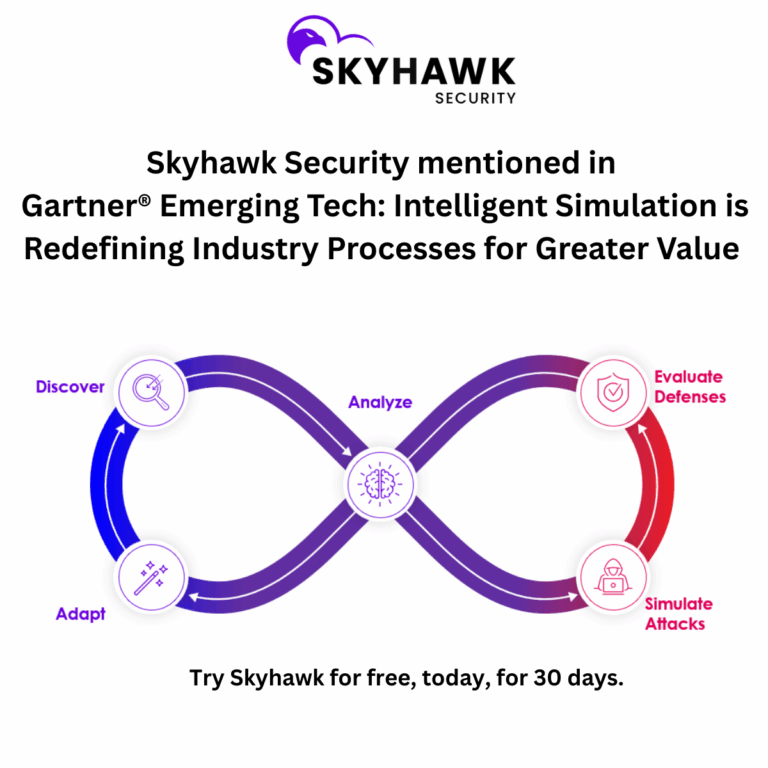
Skyhawk Security’s Intelligent Simulation is the key differentiator, enabling realistic attack simulations without disrupting production environments. By integrating an AI-based Red Team with an AI-based Blue Team, the platform creates a powerful Purple Team synergy that helps penetration testers and SOC teams collaborate to reduce cloud risk effectively.
- Close the Skills Gap: Skyhawk’s AI delivers expert-level penetration testing capabilities out-of-the-box. It automates the complex and specialized tasks of cloud exploitation, reducing the burden on your team and ensuring a consistent, high level of security validation, regardless of your in-house expertise.
- Continuous, Real-Time Validation: The cloud is dynamic, with configurations and controls changing constantly. Skyhawk continuously identifies and tests for weaponized vulnerabilities, ensuring your security team is always focused on the most critical risks in your live environment.
- Comprehensive, Customized Attack Scenarios: Unlike manual testing, which is limited by time and human scope, Skyhawk’s AI-based Red Team leverages automation to analyze vast amounts of data. It creates custom attack paths tailored to your specific cloud infrastructure, uncovering the chained exploits and complex vulnerabilities that human testers often miss.
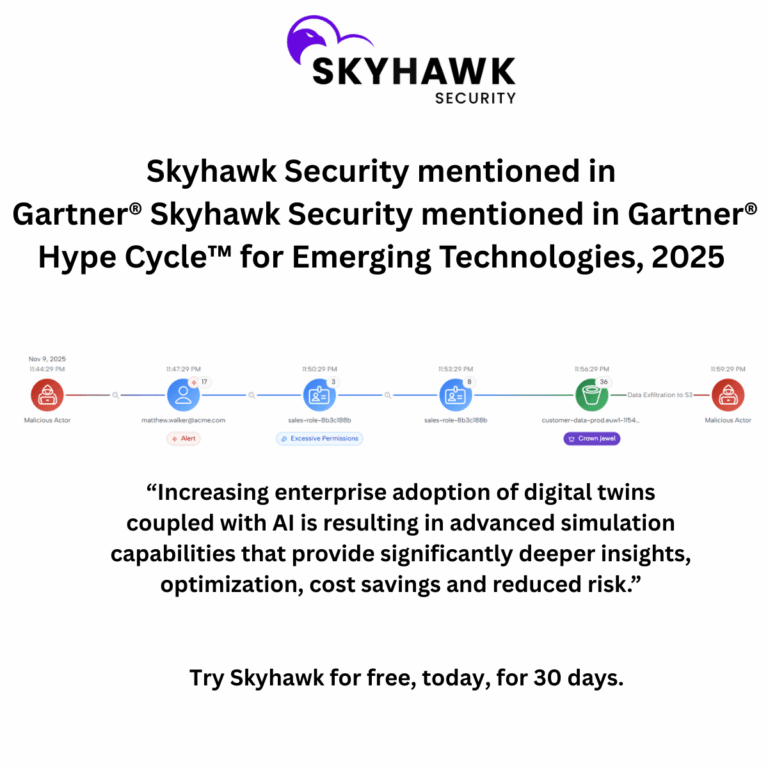
- Non-Disruptive and Cost-Effective: Skyhawk’s AI-powered service operates on a digital twin of your environment, allowing it to execute attack simulations without any impact on production systems. This continuous validation can be run at a fraction of the cost and effort of hiring a traditional, human-based red team for periodic assessments.
Don’t let the cloud skills gap become your organization’s blind spot. Embrace the future of security validation with a solution built for the complexities of the modern cloud.
Want to learn more? Try our product, free, for 30 days!
Are you going to RSA? Us too! Book a meeting today!