Skyhawk Security recently engaged with a company to evaluate their readiness to prevent AI Autonomous attacks on their AWS cloud. What we found surprised even us. The security team was confident they were doing everything right and what is so eye-opening is that to a large extent, they did. They followed best practices, their identities had permissions configured to right sizing, they implemented a leading cloud security platform, and addressed all critical findings.
And yet, Skyhawk’s Agentic AI Red Team took over their production AWS organization in seconds. Starting with only low-privilege permissions, the Red Team took over the AWS Organization in seconds. Once a threat actor has complete control of a production cloud environment, the consequences are unlimited: they can access anything, modify anything, and act at any time. This is game over.
What makes this detection particularly significant is that the attack was built entirely from legitimate configurations, paths that no conventional CNAPP would flag, chained together dynamically by Skyhawk’s autonomous AI attack simulation. There was no warning, alert, or detection that anything like this catastrophic would ever be possible in this company’s cloud.
They were doing everything right.
For years, the industry operated on a foundational assumption: the vast majority of cloud breaches result from a user misconfiguration. If you followed best practices, the risk of a catastrophic breach was manageable. This Autonomous AI Attack Simulation shattered that assumption.
There were no misconfigurations or over permissive privileges involved in this attack. Skyhawk’s AI Red Team simulated how an AI-enabled threat actor could exploit entirely legitimate configurations to take over a full AWS organization without triggering a single alert preemptively and during the attack.
Key Differentiator: An AI-Enabled Adversarial View of the Cloud
Skyhawk’s autonomous AI Red Team identified a chain of permissions and capabilities that were individually valid and intentionally configured. Through the dynamic manipulation of roles and permissions, the AI moved laterally, from a low-privilege role to ultimately complete organizational control. No individual setting was wrong. The risk lived entirely in the combination, a combination that no traditional security tool would surface as critical. No frontier models were required to build or execute this attack.
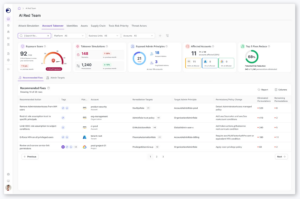
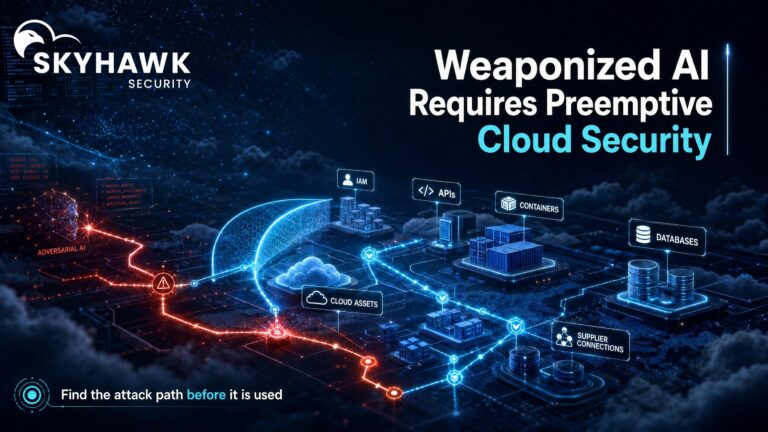
Figure 1. AI Red Team acts like an AI-enabled attacker, finding the threats that will lead to a breach in your cloud, before the threat actor does.
A traditional graph view of this environment would not have surfaced this attack path. A static attack graph analysis of the same environment showed no viable route from low privilege to organizational control, giving the security team a false sense of confidence. The AI-enabled adversarial view revealed how a threat actor could dynamically manipulate roles across the privilege boundary, step by step, until full organizational access was achieved.
Historically, discovering those connections required skilled red team operators, significant time investment, and deep familiarity with the specific target environment. Skyhawk’s AI Attack Simulation found this in seconds. This means an AI-enabled threat actor can now accomplish the same outcome, in seconds as well.
The Industry Data has moved from Warning to Real Threat
IAM is the initial access vector in over 70% of cloud attacks and is involved in approximately 83% of attacks overall. The challenge for security teams is that even after IAM right-sizing is complete and no misconfigurations or excessive permissions exist, legitimate capabilities can still be chained together to achieve a full organizational takeover. Skyhawk’s autonomous attack simulation required no human in the loop to generate or execute the attack and was able to find these legitimate configurations for a powerful org takeover. No other solution in the organization have found this.
This is precisely why traditional tools will not catch it. The blind spot belongs to any tool that does not apply agentic, adversarial techniques to model how legitimate configurations interact under real attack conditions.
The threat landscape has also moved past the question of whether adversaries are using AI. AWS and Anthropic have each published reports documenting threat actors actively using large language models to execute offensive operations. CrowdStrike’s 2026 Global Threat Report found AI involved in 89 % of attacks this year. The question security teams must now answer is not whether their cloud will face an AI-enabled attacker, but whether their defenses can see what that attacker sees.
How does Skyhawk Security help?
If following best practices and doing everything right can still be weaponized by AI to produce a full cloud takeover, what should you do?
Skyhawk Security delivers mitigation that is specific to your cloud environment and updates continuously as your architecture and security controls evolve. The platform pre-maps attack paths before they are exploited. It understands which behaviors, permission changes, and configuration shifts lead to a breach, data exfiltration, or full account takeover, and it alerts at the first few steps of an attack sequence, long before a threat actor reaches their objective.
When Skyhawk detects a threat in motion, your team can act immediately through native integrations with Jira and ServiceNow or trigger automated response actions to stop the breach before it completes.
This company was lucky that Skyhawk Security found this threat instead of a threat actor. Want to make sure your cloud accounts are ready against AI Autonomous attackers? Book a meeting with us today. https://skyhawk.security/get-a-demo/